
Services/Dental Surgery (Implants & Extractions)
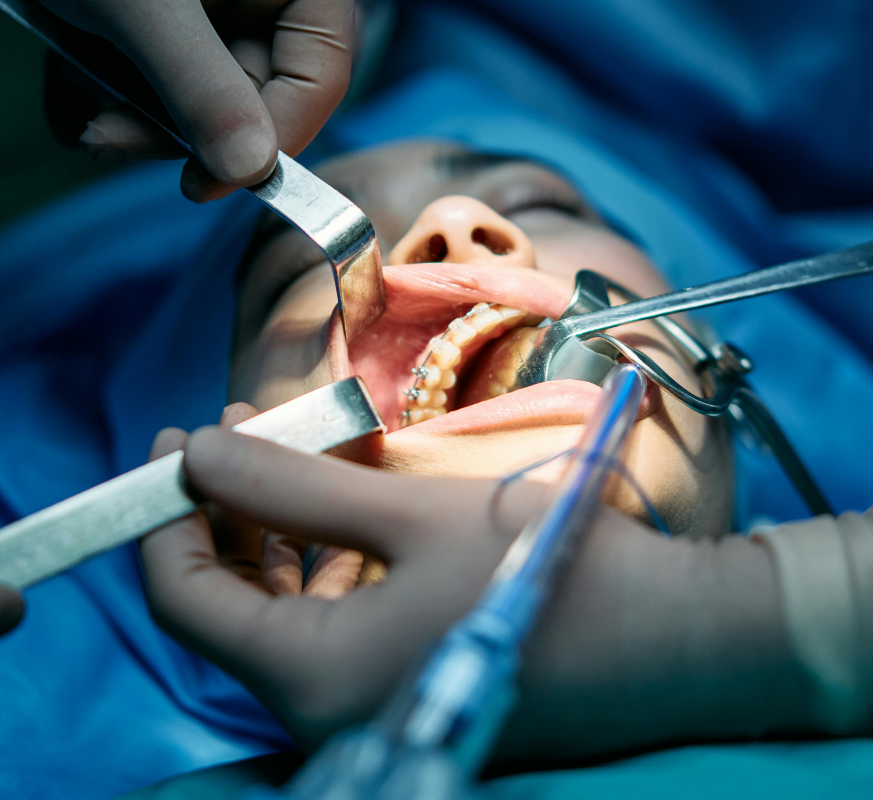
For patients dealing with Impaacted wisdom teeth removal, surgical expertise is especially important. Wisdom teeth that are trapped beneath the gum or embedded in bone can cause pain, infection, or swelling. Removing them early can prevent complications such as crowding, gum inflammation, and jaw discomfort.
Dental implants offer one of the most reliable solutions for missing teeth. A dental implant is a titanium post placed into the jawbone to function as an artificial tooth root. Over time, a natural process called osseointegration occurs, where the jawbone fuses directly to the implant, creating a strong and stable foundation. An abutment is then attached to connect the implant to the final crown restoration.
For patients missing a single tooth, a Single tooth replacement with an implant restores both function and aesthetics without affecting neighboring teeth. In cases involving multiple missing teeth, Full mouth dental implants can provide comprehensive restoration. One popular solution is All-on-4 dental implants Brampton, which allows a full arch of teeth to be supported by just four strategically placed implants, offering stability and efficiency.
Patients often ask about Titanium vs. Zirconia implants. Titanium implants are widely used due to their strength, durability, and long clinical history. Zirconia implants offer a metal-free alternative and may be preferred for certain aesthetic or biocompatibility considerations. During consultation, we discuss these options thoroughly to determine the best solution for your individual needs.
In situations where bone volume is insufficient for implant placement, additional procedures may be recommended. A bone graft involves adding natural or synthetic bone material to the jaw to provide a stable foundation for implants. Alveoplasty is a surgical procedure that smooths or reshapes the jawbone, often performed after extractions to prepare for dentures or implant placement. A sinus lift may also be necessary when adding bone to the upper jaw in the molar area to increase bone height near the sinus cavity.
Soft tissue procedures are another important aspect of oral surgery. A biopsy involves removing a small tissue sample to test for oral cancer or other abnormalities. A frenectomy removes excess tissue from the frenulum, which can help close gaps between teeth or address tongue-tie concerns. Gingivectomy, the surgical removal of gum tissue, may be recommended to treat gum disease or improve gum contour for aesthetic purposes.
For patients who feel anxious about surgery, we specialize in Oral surgery for anxious patients, offering various sedation options. General anesthesia induces a state of unconsciousness during more complex procedures, while IV sedation allows patients to remain conscious but deeply relaxed, often with little memory of the procedure. Our goal is to create a calm, supportive environment where safety and comfort come first.
From initial consultation to post-operative care, we prioritize detailed guidance and clear communication. We provide instructions to promote healing, manage swelling, and prevent complications. Our team remains available to answer questions and support your recovery.
Whether you are considering Full mouth dental implants, exploring Titanium vs. Zirconia implants, or seeking expert Impaacted wisdom teeth removal, our surgical approach is rooted in precision, safety, and compassion. At Ridgeway Dental Arts, we combine advanced techniques with patient-centered care to restore function, comfort, and confidence — helping you move forward with a healthier, stronger smile.
Surgical dental treatments can feel intimidating, but at Ridgeway Dental Arts, we approach every procedure with clarity, compassion, and clinical precision. Our focus is to ensure that every patient understands their options and feels confident moving forward. Whether you require advanced implant treatment or Impaacted wisdom teeth removal, our goal is to provide safe, comfortable, and predictable results.
Tooth extraction is one of the most common surgical procedures. A simple extraction involves removing a visible tooth using local anesthetic and specialized instruments. For more complex cases, such as impacted or severely damaged teeth, a surgical extraction may be necessary. This can include making a small incision in the gum or removing a small amount of bone to safely access the tooth. In some cases, sectioning — dividing the tooth into smaller pieces — allows for a gentler and more controlled removal. We prioritize Painless tooth pulling techniques to minimize discomfort and promote faster healing.